
Capturing photos of owls in their natural habitat is an adventure that sticks with me every time I go out.
Owls are not just shy; they are experts at blending in, moving in silence, and coming out when the light is lowest.
Getting the perfect shot can feel pretty challenging, especially when you are just starting, but with the right approach and a healthy respect for their space, it is a truly rewarding experience.
Let’s get into the secrets, best practices, and tips for success, so you too can get that eye-catching owl image.
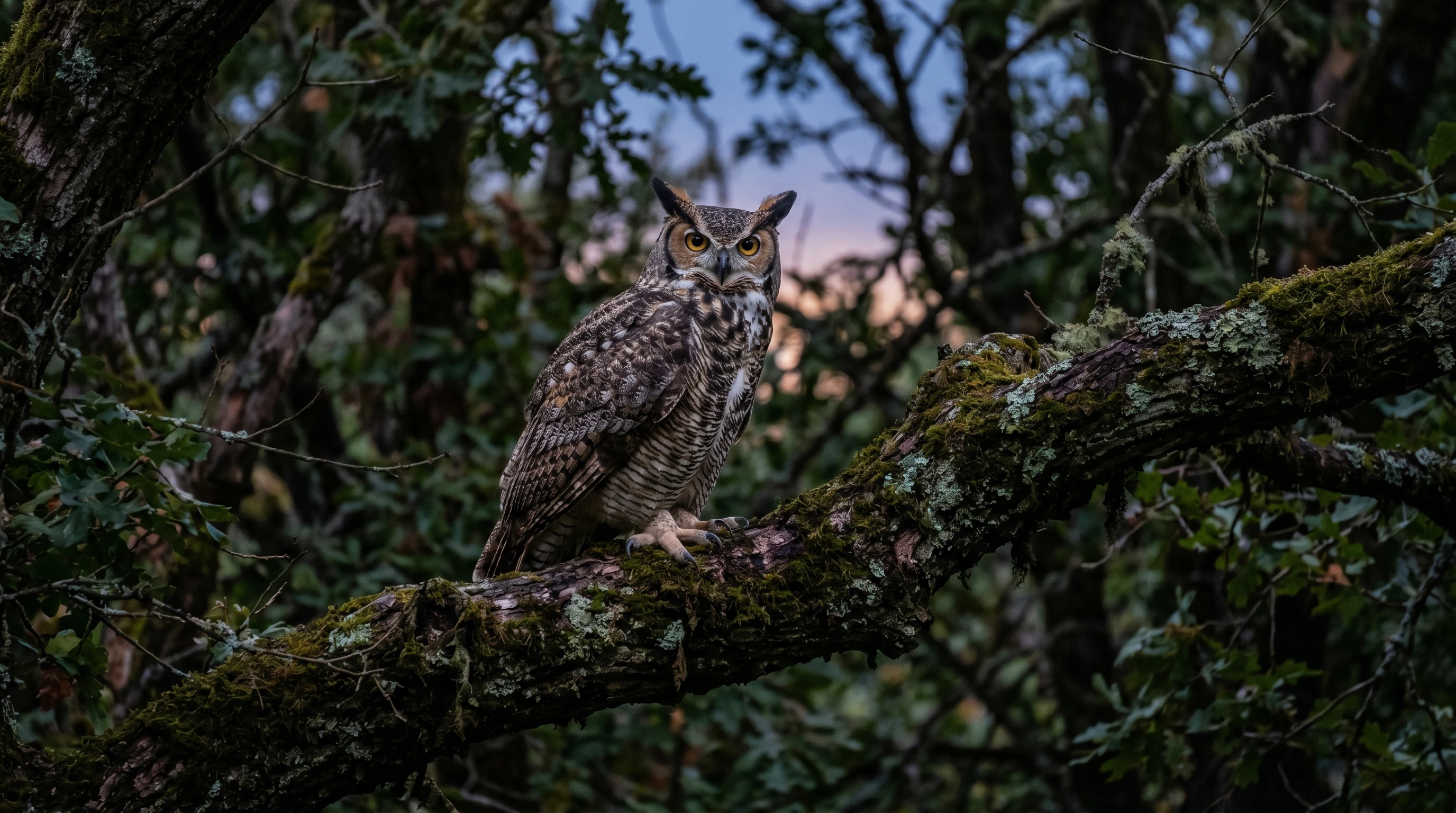
Why Photographing Owls Is Tricky (And Why It is Worth It)
Owls are a bit of a mystery.
Most species are active when it is dark or just before and after sunset. Their feathers are built for stealth, letting them fly almost silently.
Their bodies help them blend perfectly into trees and foliage. That means finding them, much less taking a clear photo, takes patience.
I have learned that you need to know where to look, how to behave in the field, and how to use your gear in tough lighting.
These skills pay off not just for owls but for all sorts of wildlife photography.
- Low light: Most owl activity happens at dawn, dusk, or night, right when light is in short supply.
- Silent flight: Owls barely make a sound, so you would not hear them coming or going.
- Sensitivity: Owls are quick to disappear if they feel disturbed, especially around nests or fledglings.
What I love most is that photographing owls sharpens my field craft and patience skills.
This all-in-one guide breaks down everything from finding and reading owls, to settings, gear, ethical practices, and making the most of tricky lighting, so both newcomers and more experienced shooters get something valuable out of it.
Understanding Owl Behavior (Know Your Subject)
Owls are not a one-schedule-fits-all kind of bird.
The more you learn about their habits, the better your chances of finding and photographing them.
Let’s check out some essential patterns and signs that make it easier to catch their natural behaviors on camera:
- Nocturnal activity: Most owls hunt at night, so if you want action shots, late evening or pre-dawn is your window.
- Crepuscular hunting: Some species like the Shorteared Owl or Burrowing Owl are most active right at dawn and dusk. These periods often offer the best light, too.
- Perching and “wait and pounce”: Owls often wait quietly on a branch or post, scanning the ground for prey, then drop in silence when they spot something.
- Roosting during the day: Finding a camouflaged owl resting in thick foliage or up against a tree trunk is tricky but great for portraits.
- Seasonal patterns: During breeding or when young have just fledged, adults are more visible. However, this is when keeping a safe, respectful distance is super important. In winter, with fewer leaves, you have more chances to spot owls in woodlands.
Best Places and Times for Owl Photography
The right location and timing does half the work for you.
Owls can turn up in a variety of places, but some spots give you much better odds than others.
Prime Owl Habitats
- Woodland edges and clearings: Ideal spots for Great Horned Owls, Barred Owls, and Longeared Owls.
- Grasslands and farmland: Look for Shorteared Owls and Barn Owls gliding low over fields at dusk.
- Wetlands and marshes: Some owl species, like the Eastern Screechowl or Great Gray Owl, can be found near swamps and wetland edges.
Best Times to Photograph Owls
- Golden hour (dawn/dusk): Owls are often hunting or switching roosts, and the warm, indirect light makes all the difference for rich colors and subtle feather detail.
- Night sessions: For those with solid gear and experience, shooting owls in true darkness is exhilarating. Just take care not to use harsh lighting that will disturb them.
Seasonal Tips
- Winter: Sparse tree cover means you can spot roosting owls more easily, especially in deciduous woodlands.
- Breeding season: There is more daylight activity for nest protection and feeding chicks, but this is when being extra careful not to stress or crowd owls is super important.
Camera Settings for Owls (From Perched to Inflight)
Getting your settings right can mean the difference between a razor-sharp shot and a blurry miss.
Here is what has worked for me, especially in challenging light:
- Shutter speed: For perched owls, I usually go with 1/500 to 1/1000. For flight, try 1/1250 to 1/2000 (or faster). This helps you keep those wings sharp.
- Aperture: Wide apertures (f/2.8 to f/5.6) pull in more light and let you blur messy backgrounds, making the owl pop.
- ISO: I am not shy about bumping ISO—modern cameras handle higher ISO better than ever, and sharpness is more important than noise. I’d rather deal with a little grain in post than motion blur.
- Autofocus (AF-C/Continuous): Continuous tracking with a small zone lets the camera lock onto an owl’s face or eyes, even if it shifts on a branch or takes off suddenly.
- Burst mode: Firing off several shots as an owl launches into flight means I catch the best wing and head position.
Essential Gear for Capturing Owl Photos
The right kit definitely helps, but you do not have to buy the priciest gear to get good results.
Here is what I bring to the field (affiliate links below are to products I personally use or recommend):
Recommended Lenses
- Telephoto lenses (300–400mm) are great when you are hiking or moving around.
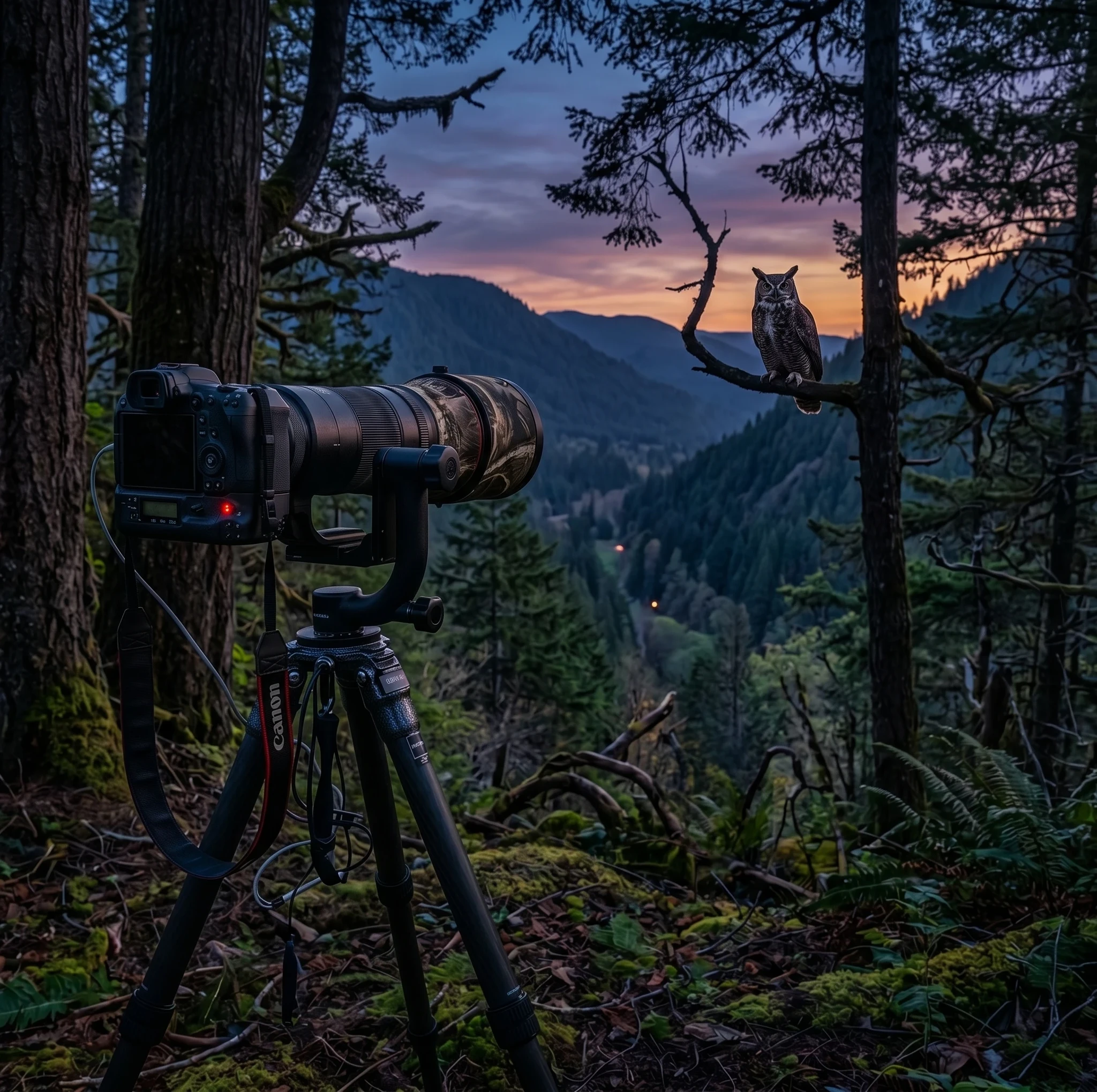
- Supertelephoto (500–600mm) gets you crisp shots from a distance, which is particularly handy when you need to stay far from nests or skittish species.
- Look for fast lenses with f/2.8 or f/4 max apertures for low light.
Tripods and Supports
- A sturdy tripod with a gimbal head keeps things steady and lets you track slow wing beats smoothly.
- Monopods make it easier to move after an owl if you do not want to carry a tripod through thick woods.
Accessories Worth Having
- Fast memory cards sync with burst mode, so you would not miss action due to buffer lag.
- Extra batteries: Cold weather and long sessions drain power quickly.
- Lens hoods to reduce glare.
- Camouflage clothing or a portable hide helps you blend in. I have spent many chilly mornings inside pop up blinds waiting for that single head turn.
- A headlamp with a red light lets you find your way before sunrise without alerting wildlife.
Daytime vs Night Owl Photography
Different lighting changes everything about the way you shoot an owl.
Here is how I mix it up for the best results:
Daytime (Roosting Owls)
- Move slowly, stick to the edges, and use softer camera settings. I focus on catching subtle eye reflections and feather patterns in dappled shade.
Night Photography
- Shoot with available ambient light like moonlight or a distant streetlamp if you can. Boost that ISO, but keep an eye on shutter speed to freeze motion.
- Skip the harsh flash—owl`s eyes are sensitive. For some species, even small LEDs can change natural habits.
Ethical Field Techniques for Owl Photography
There is a big difference between getting a shot and getting it ethically.
I have seen too many photos where it is clear the owl was stressed or the habitat was trampled.
That is not what we are after.
- Keep a respectful distance: Telephoto lenses mean you do not need to get close. Never approach nesting birds or young, since adults may abandon nests or refuse to return.
- Stay quiet, move slow: Letting owls get used to your presence (without sneaking up) means they act naturally, and your chance at real behavioral photos goes up.
- Limit your session: A quick 10 to 15 minute observation is usually plenty. Long stays can add stress, especially in breeding season.
- No baiting, no playback: Using food or recorded calls seriously messes with owl behavior and feeding patterns. It’s not worth it for a photo.
Finding the Right Angle: Positioning & Approach
Every good owl shot benefits from a little stealth and planning in how you position yourself.
- Use natural cover like trees, shrubs, and the lay of the land to get closer without being obvious.
- Shoot at eye level for more visual impact. Find slightly higher ground if the owl is perched high up.
- I have had more success with the “set up and wait” tactic rather than following an owl. Patience often pays off with closer, more relaxed subjects.
Lighting Techniques for Owls
- Golden hour: Owls look amazing in the warm early morning or late evening light. You will get stunning catchlights in their eyes and a soft glow on feathers.
- Side light: Brings out the details in facial disks and plumage texture, especially cool for profile shots.
- Backlight: Rim lighting at dusk or dawn silhouettes owls beautifully and highlights fluffier feathers.
- Overcast days: Provide soft, even light without harsh shadows, which is nice in woods where light changes fast.
Composing Striking Owl Images
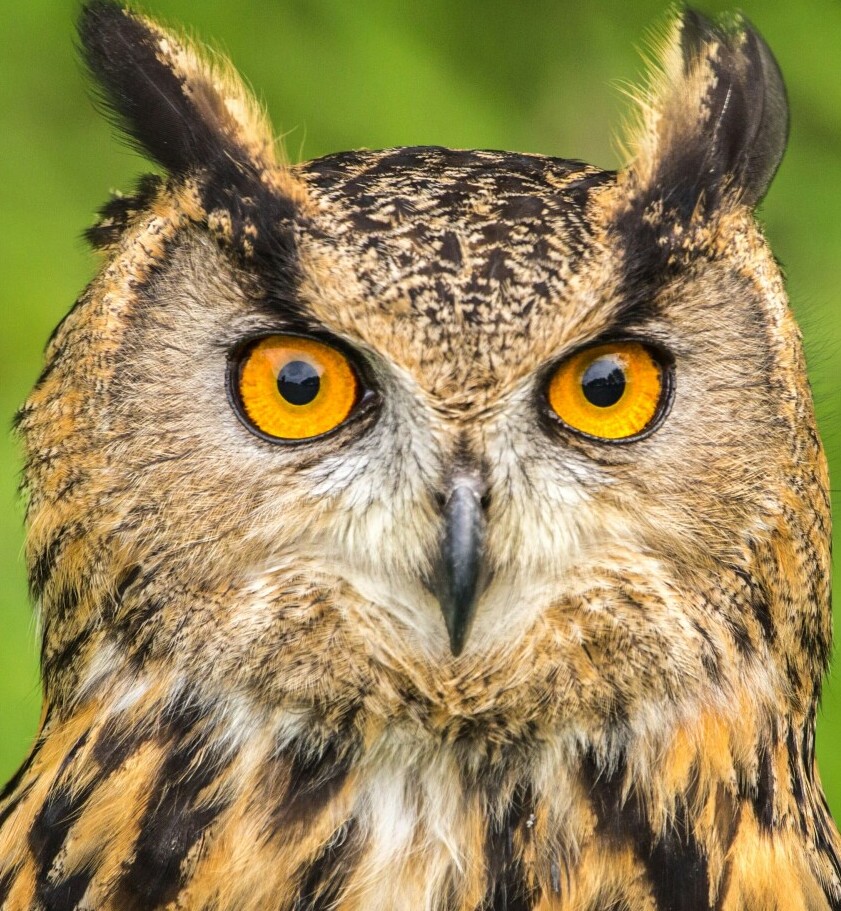
- Focus on the eyes: If the eye is not sharp, the shot loses impact. I use single point autofocus right on the owl’s face.
- Clean backgrounds: Position yourself or use wide apertures to blur out twigs and leaves behind the subject.
- Include the environment: I like to show an owl along a mossy branch, inside a hollow, or against dusk colors for a real sense of place.
- Capture behavior: Look for moments, like head turns, blinking, or the lean forward right before takeoff.
Catching Owls in Flight
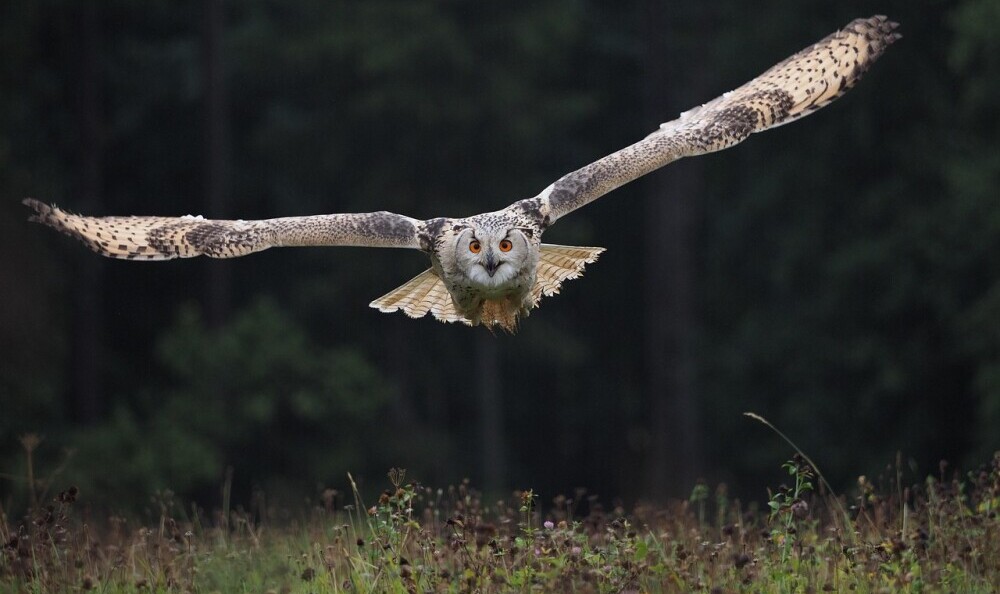
Getting an owl sharp and centered in flight is one of the biggest thrills in bird photography for me.
Here are a few tips that reliably boost your rate of awesome flight shots:
- Pre focus on a likely perch or launch path.
- Use continuous AF and burst mode. Follow the owl smoothly, but focus on keeping the head and eyes sharp.
- Shutter speed above 1/1250 (and even 1/2000+) is key for freezing motion, especially in low light.
- Spot takeoff cues: Most owls do a little lean forward and puff up before launching, so stay ready.
Common Mistakes in Owl Photography (And How to Avoid Them)
- Too slow shutter speeds; this leads to extra blur, especially in low light.
- Getting too close; besides stressing the bird, you will usually end up with a spooked subject and a missed shot.
- Messy backgrounds; double-check the composition and isolate the owl from bright spots or clutter.
- Over exposed faces; be careful with white or pale facial disks. Check histograms if you are unsure.
- Too much noise reduction; do not overdo it in post—you will lose fine feather details that make the shot special.
Practice Plan for Beginners (From Perch to Flight)
- Start with perched owls late in the day. They are easier to spot and photograph, and the light is softer.
- Once you have got focused portraits, try low light shots with higher ISO. Experiment at dusk and learn your camera’s limits.
- Move on to capturing takeoffs and flight sequences. Use burst mode and quick focus skills.
- Visit known roosts often. Getting familiar with patterns helps you spot subtle changes in posture or behavior that signal a good shot is coming.
Quick Gear & Settings Checklist
- Shutter speed: 1/500 (perched); 1/1250 to 1/2000+ (flight)
- Aperture: f/2.8 to f/5.6 (as wide as possible)
- ISO: As needed for sharp, well-exposed shots (don’t be afraid of higher values)
- Continuous AF and burst mode for moving subjects
- Telephoto lens (300 to 600mm); tripod/gimbal for longer sessions
- Padded bag with extra batteries, memory cards, lens cloth, and head-lamp (with red light option)
More Guides You Might Find Helpful
- Best Lighting Techniques for Bird Photography
- Photographing Rare and Elusive Birds
- Capturing Bird Feathers in Detail
Frequently Asked Questions
What’s the best shutter speed for photographing owls?
For perched owls, I like 1/500 to 1/1000. For flight shots, jump up to 1/1250 to 1/2000 or even faster for the best chance at sharp wings.
Can I photograph owls at night without flash?
Yes, you can. Use available light, dial up your ISO, and pick a wide aperture. A fast lens helps. Avoid using flash because that can disturb owls.
What lens is best for owl photography?
Telephoto lenses in the 300 to 600mm range let you stay far enough away not to stress the owl but still get close, detailed images.
How do I find owls in the wild?
Scout prime habitats like woods, fields, and wetlands at dawn and dusk. Listen for noisy flocks of crows or jays mobbing a hidden owl, and learn local species’ habits and preferred roosts. Birding groups and wildlife forums can be really helpful, too.
Wrapping up, photographing owls is both challenging and deeply rewarding.
Whether you want a striking portrait, an action-packed flight shot, or simply a peek into these birds’ lives, patience and a respectful approach will give you the best results and help keep these next-level cool birds safe in the wild.
Happy shooting!!!!
I’ve recently become completely captivated by bird photography, and owls have quickly stolen my heart as my favorite subject. I’ll never forget the first time I caught one perched quietly at dusk. It was astonishing how it camouflaged itself against the trees; I almost walked right past it! What truly amazed me was the patience it took; sitting there in silence, being respectful of its space, made finally capturing that shot so much more rewarding.
Reading your guide brought back those memories and sparked new inspiration for me, especially those tips about utilizing golden hour light and focusing on the owl’s eyes. Do you think photographing owls at dawn yields better results than at dusk, or is it all about where you’re capturing them?
Hi Leica,
Welcome to the owl obsession — there is no going back once they steal your heart hahaha!!!
That first dusk encounter you described is exactly it. camouflage, the silence, the patience… and then the reward when you finally get the shot.
You nailed what makes owl photography so addictive: respect first, photo second.I’m so glad the guide brought those memories back and that the golden hour + eye focus tips sparked new ideas for you.
To your question: Dawn vs dusk — it depends on the owl and the location, but here’s how I think about it: -Light quality: Both are golden hour, so technically equal. But dawn often gives you calmer air = less heat haze, and dew on branches/perches can add gorgeous texture in Black and White or color. Dusk gives you warmer tones and more active prey, so hunting shots are common.
-Owl behavior: Many owls like Great Horned or Barred are active at both. But dawn catches them finishing a night of hunting — often fuller crops, more relaxed, sometimes vocal. Dusk catches them just waking up — more alert, stretching, head swivels, first flights.
-Location matters most: Deep forest owls = dusk is often better because dawn light takes forever to penetrate the canopy. Open field/farmland owls like Short-eared = dawn is magic because you get them against open sky as they hunt their last mice. Urban park owls = whichever time has fewer people/dogs.
My personal keeper rate is slightly higher at dawn because the birds are less skittish and the air is still. But my most dramatic shots are usually dusk with that fiery backlight.
Best advice: Try both at your local spot. Owls are creatures of habit.
If you find one at dusk, there is a good chance it roosts nearby at dawn.
What species was your first owl? Would love to hear if you’re chasing a specific one next.
Thanks for sharing that story — brought me right back to my first too.
Best regards
Ray