Photographing birds of prey with a drone is a wild ride.
There is nothing quite like catching a hawk’s silhouette soaring over a cliff or an eagle gliding above a river.
But just because drones can get you those unique angles doesn not mean you should throw caution to the wind.
Raptors are powerful, sensitive to intrusion, and protected by law in many places, so respecting their space is really important if you want the experience to be safe and rewarding for everyone involved: the birds, you, and your gear.
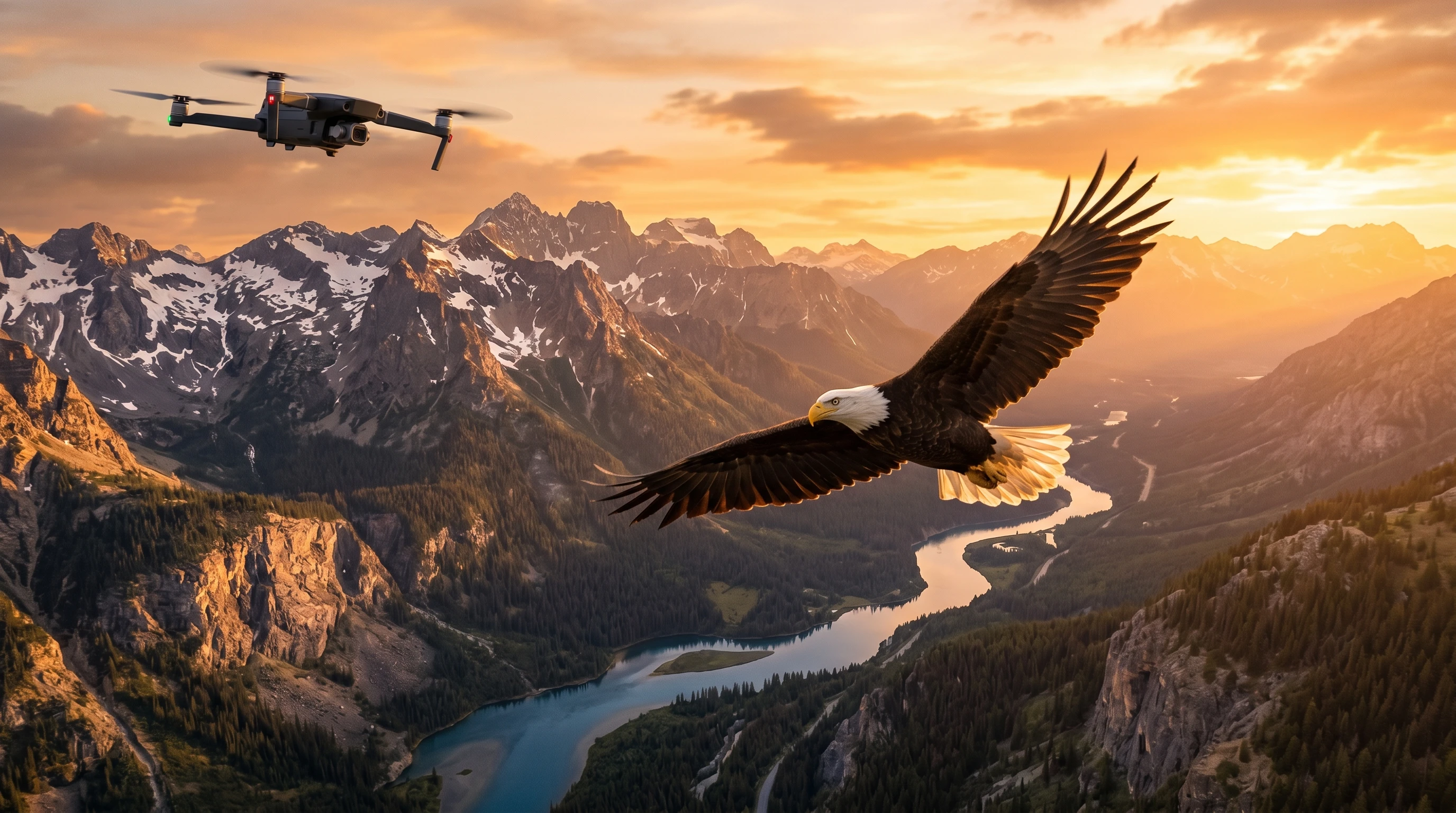
Getting Started Safely: Key Principles for Drone Bird of Prey Photography
Drones make it possible to photograph eagles, hawks, falcons, and owls from perspectives you woud never get with a regular camera.
The catch is, unlike pigeons or songbirds, raptors can get very nervous around flying objects.
They have got keen eye-sight, are super territorial, and sometimes see drones as threats or prey.
I have learned that priority one is always to keep the welfare of the birds at the center of every decision you make.
- Keep a respectful distance. Shooting from at least 100m away is ideal. Many telephoto-equipped drones offer close-up detail without you needing to get in the birds’ faces.
- Use the drone’s zoom features. Never rely on digital zoom; it just crops and pixelates your images. Go for optical zoom whenever possible.
- Do not crowd or chase raptors. If you notice any sign the bird is reacting to your drone, like staring, flying away, or defensive swooping, you are too close and need to back off right away.
- Plan for the unexpected. Raptors have attacked drones in the past. Keep your route, retreat plan, and manual flight controls ready in case you need to move out of the area quickly.
None of this takes away from the excitement of getting beautiful shots.
It just means you are combining skill with real care and putting the birds first.
Is Drone Photography Safe For Birds Of Prey?
It really depends on how you use your drone.
Drones can stress raptors out, make them abandon their posts, or even trigger attacks.
I know more than one birder who has seen a red-tailed hawk punch a quadcopter out of the sky.
Raptors do not mess around.
The biggest risks come from:
- Disturbing their routine. Sudden appearances from above (especially during nesting) can make them abandon eggs or young.
- Provoking defensive attacks. Territorial species will sometimes dive-bomb a drone, putting themselves and your drone at risk.
- Creating unnecessary stress. Even if birds are not physically harmed, signs of agitation (like calling out, flying off, or defensive postures) are warning signs you have crossed a line.
With the right approach, mostly by keeping your distance and watching for signs of stress, you can avoid these issues and enjoy the creative possibilities drone photography offers.
Understanding Birds Of Prey Behavior
Getting to know your subject makes a massive difference.
Birds of prey have certain patterns that help you predict and avoid disturbing them:
- Territorial instincts: Raptors fiercely defend nesting and hunting grounds from other birds and, yes, from drones too.
- Heightened sensitivity: They are hard-wired to react to fast-approaching objects in the air. So slow, steady movements work best.
- Hunting patterns: Raptors soar for hours, then dive in bursts of speed to catch prey. They often use the wind, thermals, or cliff edges.
- Nesting season: Spring through early summer is peak nesting time, and birds become especially jumpy and defensive.
Understanding these behaviors means you can choose safe opportunities to capture photos and step back when the time is not right.
For instance, watching from a distance before even setting up your drone can help you spot the best moments when the birds are relaxed, avoiding high-stress times like feeding or nest-guarding.
Taking time to observe the patterns in their flying and interactions with their environment is a great way to not only keep them calm but also to anticipate unique photographic opportunities.
When you observe that a raptor is preoccupied with hunting or soaring, rather than protecting a nest or defending territory, it is typically safer to bring out your drone.
Legal And Ethical Guidelines For Drone Use
Drone Laws
Every country, state, or province has different rules on drone flight.
Here is what I keep in mind:
- Never fly over protected nature reserves without special permits.
- Do not fly above the height limits set by your jurisdiction, usually 120m (400ft) in the US and Europe.
- Be aware of restricted airspace zones; apps like AirMap or B4UFLY are pretty handy for keeping track.
Wildlife Protection
- Disturbing nesting sites can break wildlife protection laws, even if the nest is not active.
- Most locations require you to keep a buffer zone of 100m or more from nests or wildlife habitats.
Ethical Rules
- Never chase, corner, or herd wild birds with drones.
- If you see any sign of distress, like alarm calls or rapid flight, land and pull away immediately.
- Keep flight times short and flights infrequent in the same area.
Sticking to these guidelines keeps birds safe and protects you from accidents or legal trouble.
If you are ever unsure about the rules for your location or a specific bird species, it is always good to check with local wildlife officials or bird watching groups.
Many regions even publish updated drone laws specific to wildlife areas, making it easier to game plan before you head out for a shoot.
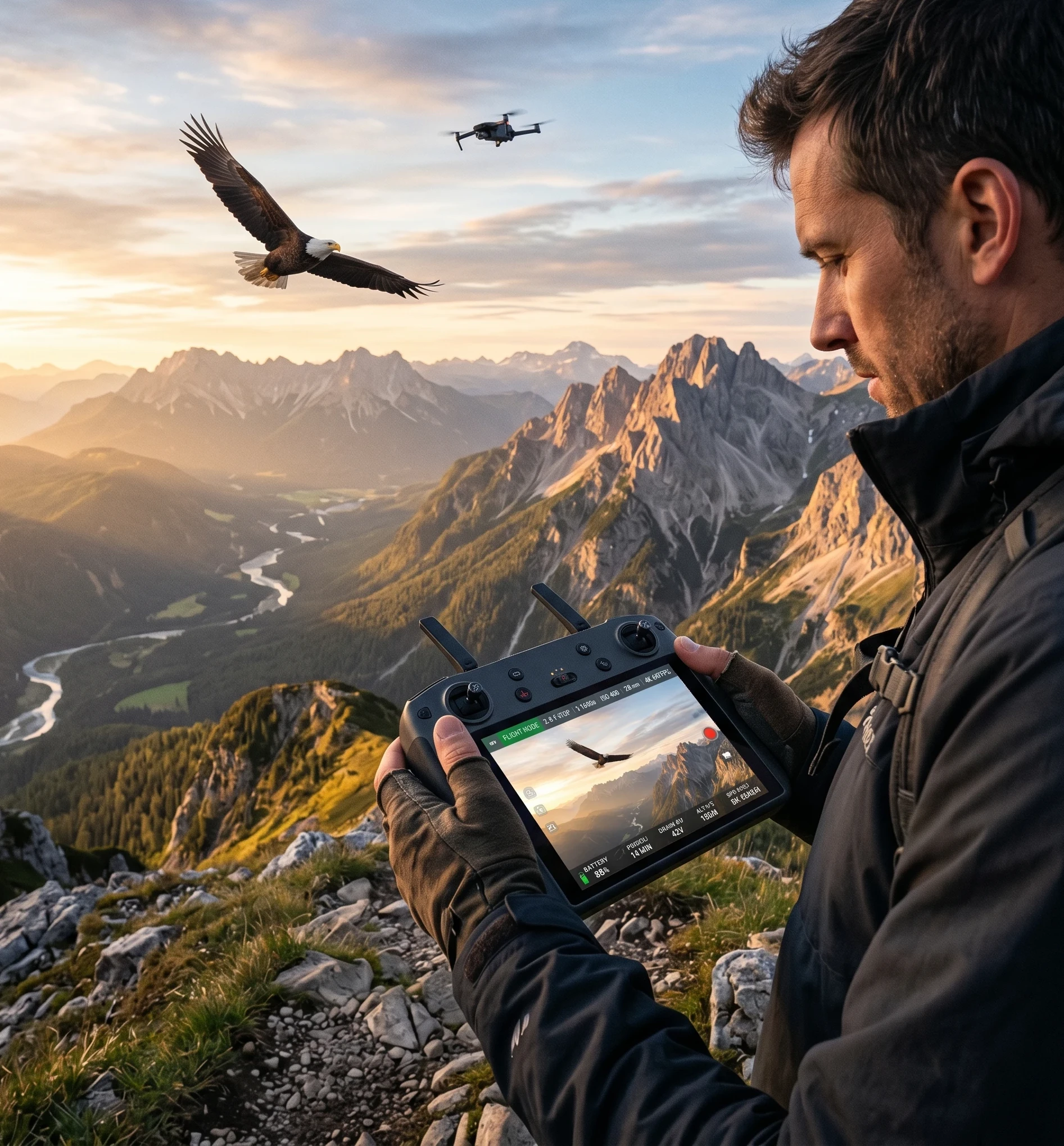
Best Drone Settings For Birds Of Prey Photography
Shutter Speed
- For perched birds: 1/1000 to 1/1600 sec freezes any sudden movements.
- For flying or diving shots: 1/2000 to 1/3200 sec is your friend; raptors move fast!
ISO
- Lower ISO (100 to 400) in sunlight keeps your images crisp.
- If it is cloudy or near dusk, gently bump ISO to 800 or 1600. Modern drone cameras handle this well.
Aperture
Most drones have fixed apertures, usually around f/2.8 or f/4.
This works out well for flying birds, since you will want more light and a decent depth of field anyway.
If your drone does have an adjustable aperture, you can set it smaller (like f/5.6) on brighter days for sharper focus across more of the image, but in the early morning or late afternoon, keeping it wide open ensures you do not sacrifice shutter speed.
Shooting Mode
- Burst mode is super useful for catching wings at different angles or mid-dive action.
- Always shoot in RAW if your drone supports it; editing brings out details you would miss in JPEGs.
Taking the extra time to practice with these settings at home, especially on static objects or flocks of common birds, really pays off when you are in the field with raptors.
You will waste less time fiddling with the camera and more time actually shooting when everything is in motion.
Choosing The Right Drone (With Gear Tips)
Key Features
- Optical zoom lets you get close without spooking the bird.
- Quiet propellers cut down on noise, making it less likely to disturb sensitive species.
- Stable flight controls and three-axis gimbals help ensure sharp, smooth photos even in gusty conditions.
- Big sensors (1inch or more) improve image quality, especially in low light.
Recommended Drone Types
- For beginners: Drones like the DJI Mini series offer simple controls and portable design. They are good for basic birding at distance.
- For enthusiasts: The DJI Air, Mavic, or Autel Lite models with good zoom and advanced obstacle avoidance work well.
- For pros: Flagships like DJI Mavic 3 or Autel EVO 2 Pro have higherend sensors, long zooms, and shooting flexibility.
Accessories Worth Considering
- ND filters help control exposure when you’re shooting in broad daylight.
- Extra batteries keep you ready for longer waits and more flyovers.
- Spare propellers are useful in case of close calls or unexpected landings.
- A landing pad saves your drone from grass, dust, or sand in rough terrain.
Carrying a polarizing filter can also help cut glare from water surfaces and boost the clarity of your bird shots in lakeside or riverside habitats, bringing natural colors and details to the forefront.
For those longer days out, a portable charging system for drone batteries, like a power bank with AC output, means you would not be stuck with empty batteries when the lighting is perfect for golden-hour shots.
Flight Techniques For Photographing Birds Of Prey
Start High And Stay High
I always launch the drone further away than I think I need—usually 100 to 200 meters out—and let the bird get used to it from a distance.
If the bird ignores the drone, I gently descend or edge closer while watching out for signs of agitation.
Avoid Direct Approach
Nobody likes something barreling at them head-on.
I approach from the side or above, keeping movements smooth and slow; cinematic or tripod modes are perfect for this.
Sometimes flying in wide arcs around the bird rather than heading straight toward it gets better reactions—and more natural images as the bird stays calm in its environment.
Smooth, Controlled Movements
Jerky or sudden directional changes tend to spook wildlife.
Slow pans or gentle orbits keep birds calm and help capture more natural poses.
Pre-plan your fly routes to keep movements minimal, and use waypoints if your drone supports them.
Practicing with these flight modes on inanimate targets or distant animals helps build up your skills for when an opportunity with a raptor comes along unexpectedly.
Best Locations And Timing
Ideal Locations
- Wideopen spaces like grasslands, deserts, or marshes give safe flight paths and beautiful, clean backgrounds.
- Cliffs and ridges, especially near water, are prime hunting spots for hawks, eagles, falcons, and ospreys.
- Lakes and rivers often bring in a variety of raptors, especially during migration.
It is worth scouting these locations ahead of time.
If you are un-familiar with the area, arriving before sunrise not only increases your chances of spotting raptors but also gives you time to set up your drone and prepare flight paths that avoid sensitive zones.
Chatting with local bird watchers or wildlife photographers can also provide key insight into where birds of prey are regularly seen and which spots are off-limits or best observed from afar.
Best Time Of Day
- Early mornings and evenings (“golden hour”) offer softer light and more bird activity. It is when raptors hunt and soar on updrafts.
- Midday is usually harder for bird activity, and the lighting is not as flattering for photos.
Sunrise often coincides with cooler temps and calm air, which is a bonus for both drone handling and bird comfort.
During strong wind conditions (common in the afternoon), many birds of prey adjust their hunting technique, so you might catch unique flight behaviors, but it becomes harder to shoot steady images.
Always check the weather—clear, low-wind days tend to be best for both drone performance and bird safety.
Composition Tips For Stunning Drone Shots
Wide Environmental Shots
Show the full scale of the bird’s world.
Capturing an eagle against a lake or a hawk gliding over open grassland tells stories you cannot get from the ground.
Incorporating dramatic landscapes gives additional context and depth to your images, making the bird a powerful subject against nature’s tapestry.
Using Negative Space
Let the raptor be just a small part of the frame, leaving plenty of open sky or landscape.
Negative space emphasizes the bird’s power and the vastness around it.
This technique works exceptionally well when the background is minimal, like clouds, water, or wide plains, letting the bird really pop.
Capturing Movement
Use burst mode to catch dynamic scenes, whether it is an osprey grabbing a fish, a falcon stooping, or a hawk banking on a breeze.
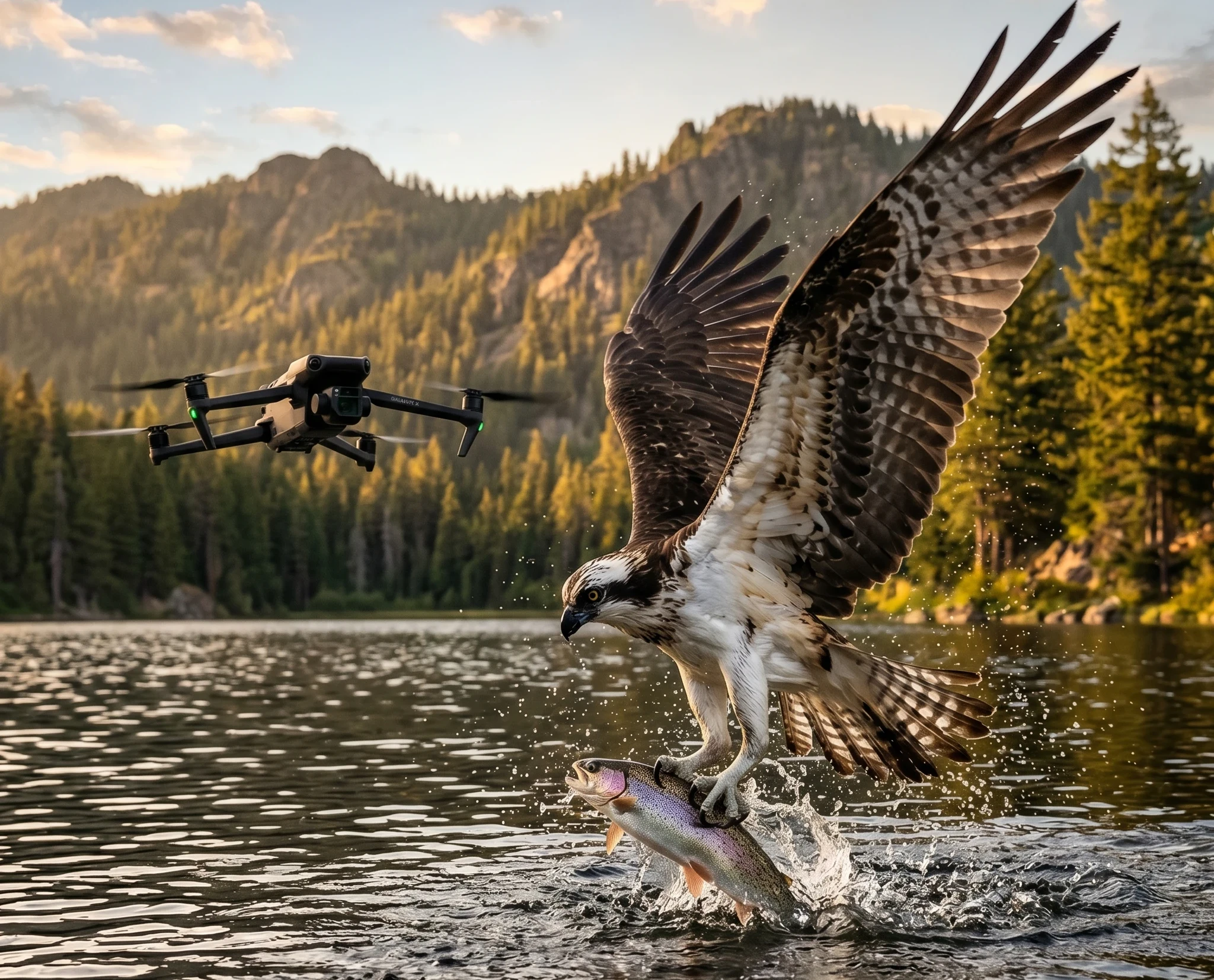
These moments are fleeting and look amazing shot from above.
Tracking focus (if available on your drone) can help you keep speedy subjects sharp throughout the sequence.
Experimenting with camera angles and drone heights can also give you a unique perspective on classic bird poses, such as when a raptor flares its wings to land, casts its shadow on the earth, or interacts with other birds.
Common Mistakes To Avoid
- Flying too close or too fast; more likely to frighten or threaten birds.
- Ignoring behavioral cues and missing the signs of stress or defense, which leads to ruined shots and stressed wildlife.
- Using slow shutter speeds; blurry shots are a real bummer when you finally catch a raptor soaring.
- Poor flight positioning; bad angles or the wrong light time hurts both composition and safety.
- Overusing digital zoom; images turn soft and noisy compared to true optical zoom.
Another pitfall is assuming every raptor will react the same way to your drone.
Some birds are extremely tolerant, while others spook quickly, even from a distance.
Adjust your approach with each encounter, and always put safety and respect above getting that perfect shot.
Beginner Practice Plan
- Work on your drone piloting skills first. Master smooth takeoffs, landings, and stable hovering away from any wildlife.
- Start with landscapes, then photograph distant birds or groups in open areas.
- Take a pair of binoculars and observe bird behavior before flying the drone. This helps pick the right moment for safe photography.
- Practice restraint: not every session needs to end with a closeup. Wide shots often look cooler and keep the birds comfortable.
Take notes on what works and what does not in your practice sessions. Over time, you will develop an intuition for raptor reactions and a library of reference shots that set you up for greater success when you spot a prime bird opportunity.
Quick Drone Photography Checklist For Raptors
- Maintain safe distance (100m+ if possible)
- Set fast shutter speed
- Use smooth, slow flight controls
- Activate burst mode
- Always put wildlife ethics and legal guidelines first
Drone Photography For Birds Of Prey: FAQ
Can drones disturb birds of prey?
Yes. Drones can trigger defensive or disturbed reactions, especially in nesting season or if you fly too close. Signs include alarm calls, diving, or fleeing.
What is a safe distance for drone bird photography?
I recommend staying at least 100 meters away from perched or nesting birds. If your drone has a zoom lens, you may get great shots even further out.
What drone is best for wildlife photography?
Drones with optical zoom, quiet flight, and reliable stabilization are ideal. DJI Mavic 3, Air 3, or Autel EVO Lite+ are all worth checking out.
Is drone bird photography legal?
This depends on your local laws and if you fly in protected areas or near nests. Always double-check regulations and never fly where wildlife is specifically protected without permission.
Final Thoughts
There’s nothing quite like photographing birds of prey with a drone when you do it responsibly.
Respect comes first, and with time and patience, you’ will capture images that showcase the power and beauty of raptors without disturbing their world.
If you are looking for more specific advice, check out my guides on
- How To Ethically Photograph Birds With A Drone, How To Fly A Drone Safely Around Birds,
- and Best Beginner Drones for Bird Photography. Enjoy your adventure, keep the well-being of these incredible birds at the forefront, and share your next-level cool images with care and pride!
Happy bird photography!!!!!!
Birds of prey are awesome creatures and catching them in natural habitats otters scenes that we didn’t know we needed. There’s one reservation that I visit to go fishing is a great place to view them. Although birds of prey offer a different experience there are tons of bird watchers taking in the scene. This had some great tips on becoming an efficient observer of these raptors. It’s so important to respect their habitat and keeping them protected as they play a huge role in the wildlife role. They are some of the most beautiful creatures in the sky. Very detailed lesson on how to successfully catch these awesome creatures at play!
Hi Shannon,
“Otters scenes that we didn’t know we needed” — love that. Raptors + otters in the same frame?
That is a wildlife photographer’s lottery ticket right there.
Your fishing reservation sounds like my kind of office.
You are exactly right: the experience is different with birds of prey. The air changes when a Bald Eagle or Osprey shows up.
Every birder goes quiet. Phones down. It is not just watching — it’s witnessing.
And thank you for saying this: “It’s so important to respect their habitat and keeping them protected.” That is the whole game. Sharp photos mean nothing if we stress the subject.
You get it.
The best drone pilots I know think like wildlife biologists first, photographers second.
Distance + observation > pixels + proximity.Since you are already at a fishing reservation with other birders, here is one tip for that exact scene:
Use the fishermen as your “behavior tell.” Raptors key in on activity.
When the fishing picks up, watch the treeline 200-300 yards out. Eagles/Ospreys will stage on dead snags and wait for a missed catch or gut pile.
If you see local birders all glassing one direction, set your drone behind you, 150ft up, and wait.
Do not chase. Let the bird come to the fish, and you come to the bird.The ethics piece you mentioned — this is critical for drones + raptors: Altitude is respect: 200ft+ for nesting season, 100ft+ minimum otherwise.
If they look at the drone, you are too close.
Time of day: Early morning hunts = less heat shimmer, calmer air, and birds are food-motivated, not nest-defensive.
Never over water during a dive: If an Osprey commits to a fish and you spook it, it burns calories it cannot afford. “Efficient observer” was the goal of that guide, so I am glad it landed.
The camera + drone are just tools. The real skill is knowing when not to fly.“Most beautiful creatures in the sky” — agreed.
And you are helping keep it that way by putting habitat first.
What raptor species are you seeing at your reservation?
If you tell me, I’ll share the #1 behavior cue to watch for before they hunt. Makes “catching them at play” way easier.
Best regards
Raymond