
Black and white bird photography is a next-level cool way to look at the natural world with a different vibe.
Instead of letting the colors do all the talking, you focus on light, shape, texture, and emotion.
If you want to create stunning monochrome bird images, there are some handy techniques that can help you bring out the drama and character of your feathered subjects.
What Is Black and White Bird Photography?
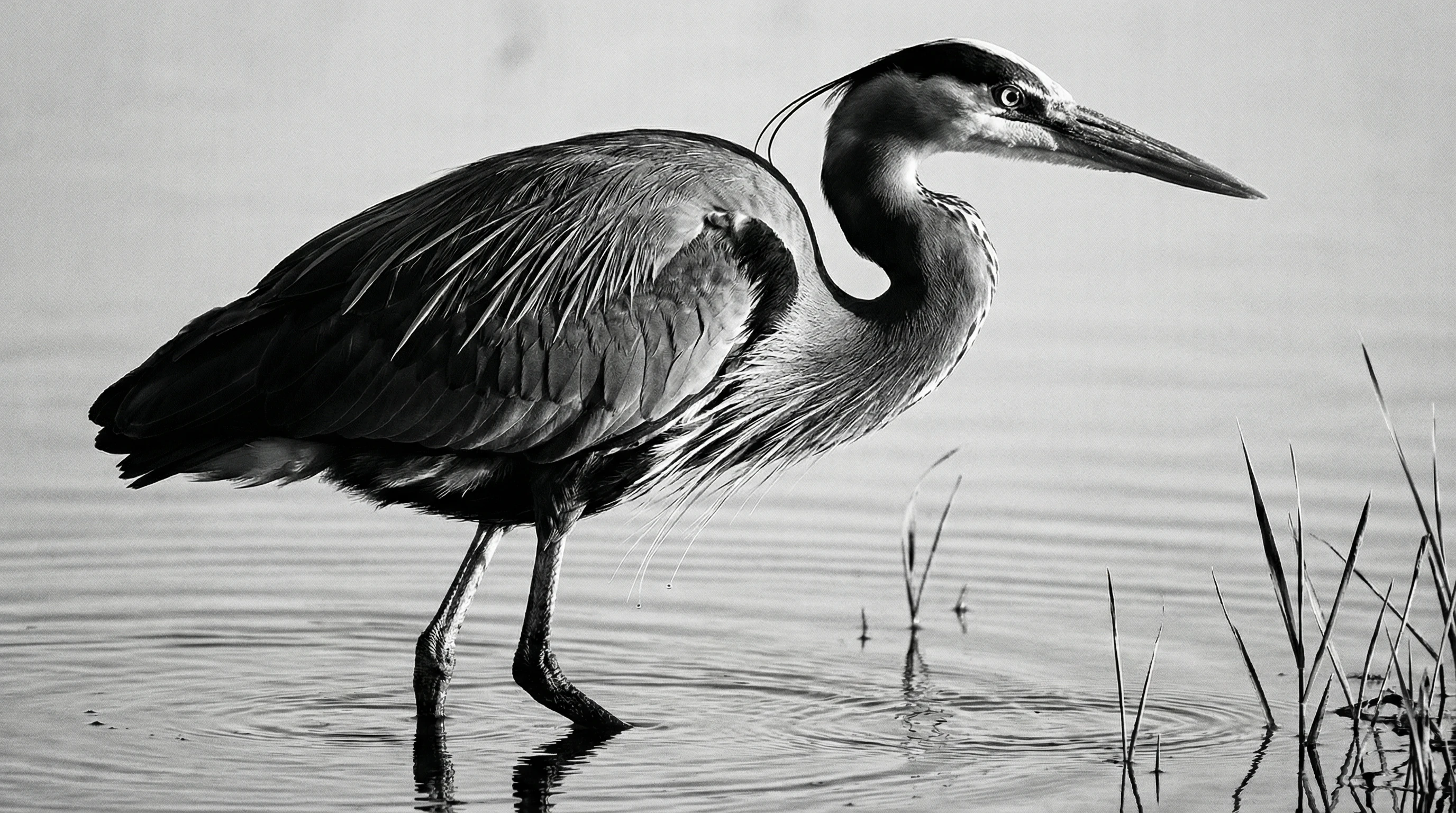
At its core, black and white bird photography is about removing the distraction of color so you can highlight shapes, shadows, contrast, and the smallest details in plumage.
While shooting birds in full color can look vibrant and lively, monochrome images can feel timeless and bring out a really strong mood.
Getting into black and white bird shots is not just about hitting “convert to B and W” in your editing software.
Shooting with monochrome in mind helps you find the best light, angles, and backgrounds, so your results feel intentional, not like you were trying to fix a photo that did not turn out right in color.
The main goal is to create striking images that use light, shadow, and form to say something special about your subject.
Why Go for Black and White Bird Photos?
There are plenty of good reasons to go monochrome when photographing birds.
Here are a few of my favorites:
- Texture First: Monochrome really highlights the fine details in feathers; every barb, shaft, and subtle curve stands out.
- No Distractions: If the bird’s environment has bold, clashing, or distracting colors, switching to black and white keeps the focus on the subject, not the background.
- Emotional Impact: Black and white images often feel moodier and more dramatic, letting you experiment with emotion, atmosphere, and even storytelling.
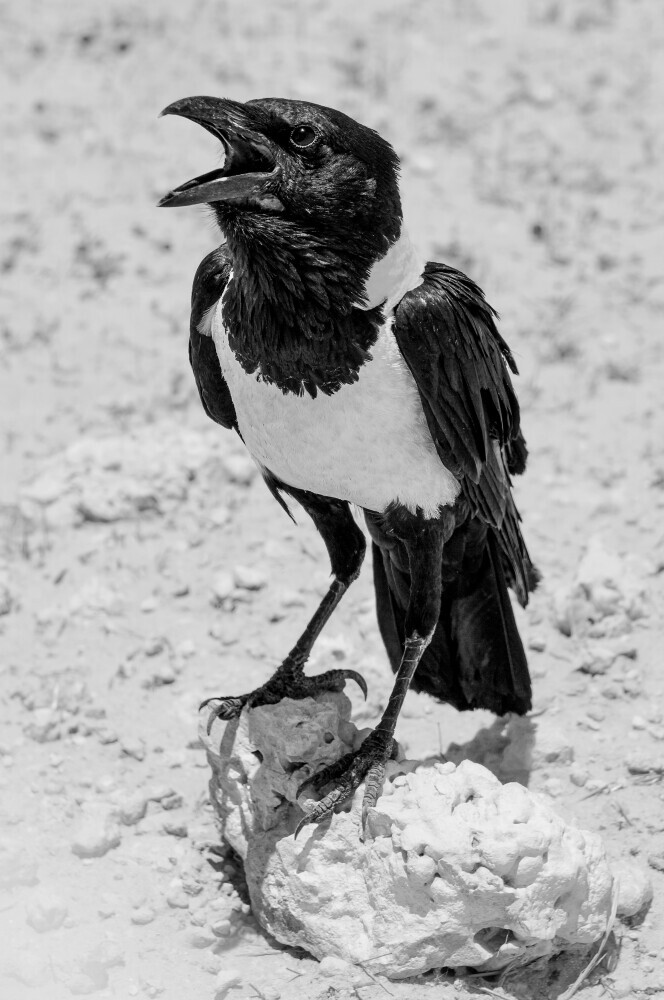
- Contrast Boost: Birds with strong light-dark feather patterns (like magpies, gulls, or herons) look even more graphic in black and white. High-contrast scenes and dramatic skies often translate beautifully too.
This approach also works especially well for high-contrast species, birds seen against dramatic skies at sunrise or sunset, and those neat times when your subject is backlit, creating a glowing outline or silhouette effect.
Even busy natural scenes become simpler in monochrome, making it easier to grab a shot that feels artful and composed.
If you want to step up your storytelling or give a boost to the emotional quality of your bird images, black and white photography is a great way to get there.
Shooting for Black and White (Not Just Converting Later)
Getting brilliant monochrome bird shots starts with thinking ahead.
Here’s what helps when you’re out in the field and want to set yourself up for a strong black and white image:
- Contrast: Strong light-dark differences between bird and background make your photo pop.
- Dramatic Lighting: Use light that carves out the bird’s features and feathers; side and backlight are your friends.
- Clean Backgrounds: Simple, uncluttered backgrounds put the spotlight on your bird.
- Texture: Look for ruffled feathers, wet wings, or interesting patterns that will stand out once color is removed.
- RAW Format: Always shoot in RAW. This gives you a lot more room to fine-tune contrast, highlights, and shadows during editing.
- Exposure: Make sure you don’t blow out the highlights; details in white feathers vanish quickly. I like to slightly under expose and use the histogram to stay safe.
Thinking ahead about shape, negative space (the open area around the subject), and how the bird stands out from its background also makes a difference.
The more you plan with monochrome in mind, the less you’ll have to “fix” later.
It is much more satisfying to bring home images that already have a strong foundation for black and white conversion.
How to Train Your Eye For Monochrome Birds
Getting good at black and white photography is all about finding scenes that look strong even without color.
Here are a couple of tips from my own learning curve:
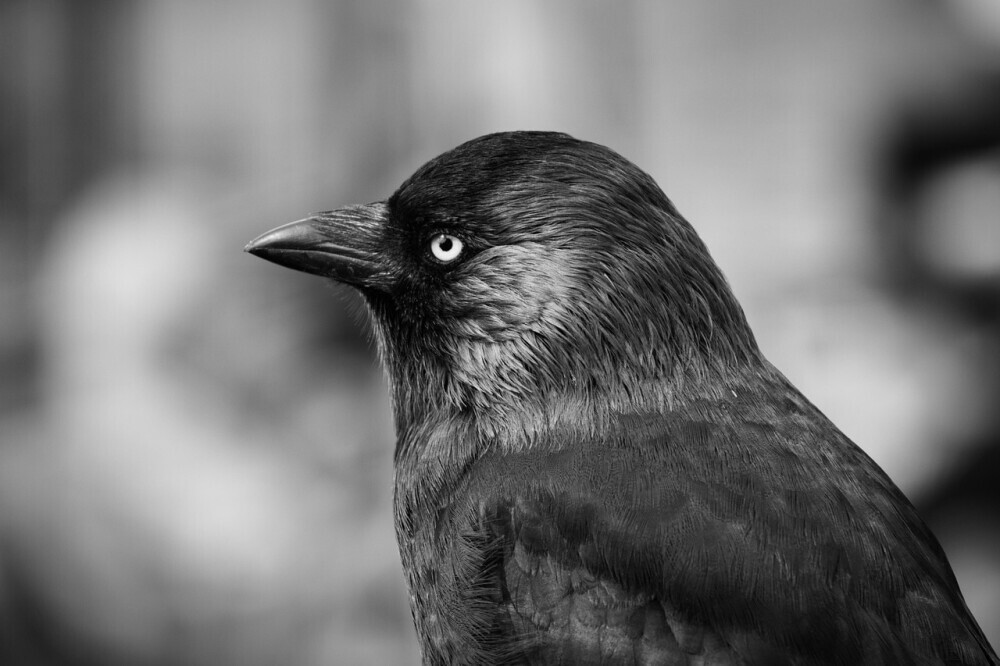
- See the Tones: Before you press the shutter, look for the big blocks of light and dark in the scene. Ask yourself: Will this bird stand out enough in grayscale?
- Learn by Preview: If your camera lets you, switch to a monochrome picture profile for live view and playback. It’s a neat way to preview what your image might look like in black and white (but always keep your RAW file).
After a while, your eye naturally looks for interesting lighting, shadows, bold shapes, and clear subject-background separation.
Over time, you’ll also start to spot unique moments, like birds perched on stark branches, catching the last rays of the sun, or standing in heavy mists that add a layer of atmosphere to your images.
Lighting That Works Wonders in Black and White
Lighting makes or breaks a monochrome image, especially with birds. Here’s what I look for:
Side Lighting
Side light reveals texture and gives your subject more shape and dimension.
Feather contours really pop and small details stand out.
Watch for moments early or late in the day when the sun is low and the light moves across your subject at an angle.
Backlighting
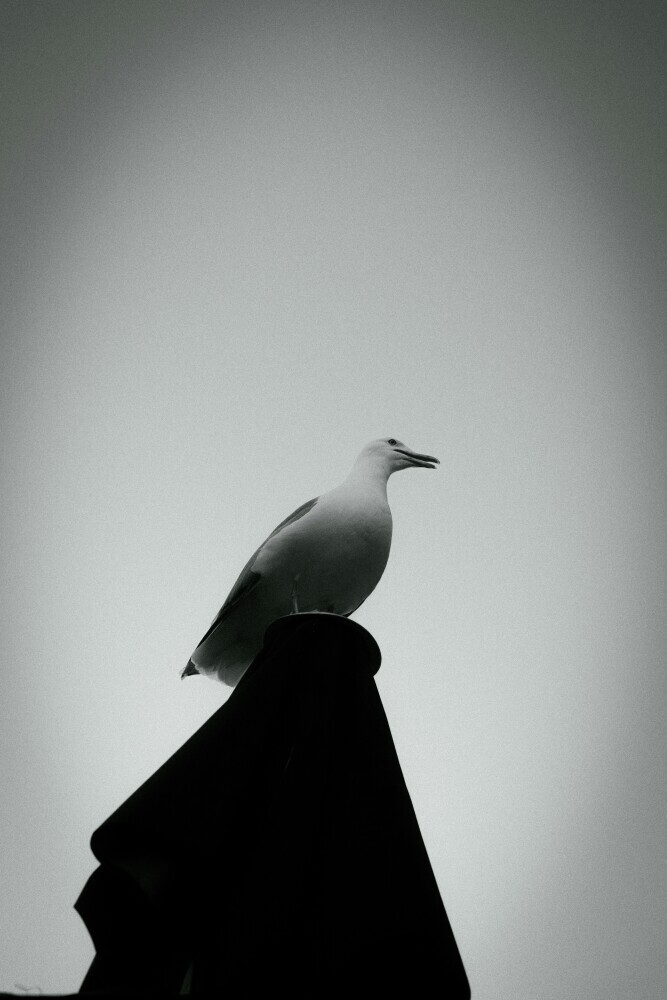
Backlighting creates rim light around your bird and works beautifully for silhouettes or when the feathers glow.
It can also separate your subject from the background for a more graphic look.
Try photographing birds in early morning or late afternoon when the backlight is soft and golden.
Overcast Days
Cloudy or foggy conditions might seem boring in color, but in black and white, the soft, even light helps you capture subtle feather detail.
There is less harsh shadow, so you get more gentle gradations in tone, which is super useful for close-ups of pale birds.
Misty days add a dreamy, quiet mood to your photos as well.
Harsh Light
Bright midday sun can work surprisingly well.
If your subject is a high-contrast bird, like a gull or a magpie, the bold shadows look striking and graphic in monochrome, even if it would look too harsh in color.
Sometimes, the harsh midday light will make patterns in the plumage pop more intensely than you would expect.
Camera Settings That Work For Black and White Bird Images
- Exposure: Lean towards underexposing slightly to save highlight detail in bright feathers. Check your histogram to make sure you’re not losing whites.
- Shutter Speed: Birds don’t sit still! For birds in flight, 1/2500 sec or faster is great. Perched birds usually need at least 1/1000 sec, depending on how fidgety they are.
- Aperture: If you want to isolate your bird from the background, go for wide apertures (like f/4–f/5.6). If you’d like to include more of the environment for storytelling, stop down (f/8–f/11).
- ISO: Keeping noise down helps, but a little grain can add a nice vibe in black and white. Don’t stress about high ISO as much as you might in color; if the mood is right, it works.
- Focus: Use continuous autofocus and make sure to keep the eye or face sharp, even if everything else is a little softer.
Experimenting with these settings lets you track down what works best for your style.
Try different combinations for both perched and flying birds to see how each setting adds something new to your photos.
Over time, you’ll get a feel for what makes every shot unique.
Powerful Composition Tricks for Monochrome Bird Photos
- Texture First: Get close and show off the patterns, lines, and scruffy details in the feathers. A ruffled egret or dripping cormorant looks incredible in black and white.
- Negative Space: Minimal backgrounds draw all the attention to your subject. An isolated bird on a wire or in the mist can be way more dramatic when everything unnecessary is left out.
- Silhouettes: Play with backlit outlines. Clean shapes and bold forms can be more powerful than allover detail.
- Eye Contact: Don’t forget the eyes. Even in black and white, a sharp, well-lit eye, even in a tight portrait, gives your photo energy and personality.
Try leading lines, such as a branch running through the image, to guide the viewer’s attention to the bird.
And sometimes, breaking conventional composition rules will help you stumble upon a look or mood you never expected—a bit of creative experimentation goes a long way in monochrome photography.
Bird Species That Shine in Black and White
Some birds just fit the black and white style naturally.
In my experience, these are particularly great to work with:
- Herons and egrets. They have pale feathers and dramatic shapes that look awesome against dark backgrounds.
- Gulls and terns. Their subtle shadows, light plumage, and bold graphic shapes translate beautifully into monochrome images.
- Raptors like hawks and owls. Sharp talons and fierce faces lend themselves to high-contrast images.
- Magpies, oystercatchers, and other high-contrast species. Black and white birds just look right at home in monochrome photos.
Additionally, birds with patterns or barred feathers, like woodpeckers or nuthatches, can look amazing in black and white, especially if you find ways to play up their distinct markings and contrast.
It is all about picking subjects that suit the style.
If you stumble upon a species with a bold silhouette or simple outline, you’re halfway to a dramatic photo.
Editing Your Black and White Bird Photos
- Convert in RAW Editor: Lightroom and Photoshop make it simple to switch to black and white, and you get full control over which tones pop.
- Use The B and W Mix: Adjust how reds, blues, greens, and yellows show up in grayscale—it is handy for dialing in feather and background contrast.
- Boost Contrast Carefully: Add punch, but do not crush your shadows or blow out the delicate feather detail. I like to make the bird’s face and eye area the most detailed part.
- Dodge and Burn: A bit of creative dodging (lightening) and burning (darkening) can bring attention where you want it and help feather texture stand out.
- Subtle Grain: Sometimes a little digital “grain” gives that arty, classic feel, especially when the light is soft or the subject is moody.
It is worth taking time during editing to really play around with subtlety.
Sometimes a lower-contrast look is more effective than a high-punch image.
Check in with your image at different points to see where it feels strongest—do not be afraid to try several virtual versions.
A simple black and white photo, well processed, can hold more feeling than you’d expect.
Common Mistakes I See With Black and White Bird Photography
- Trying to save weak color photos by converting to black and white (it rarely works unless the light and tones were right to start with).
- Forgetting about tonal separation. If your bird blends into the background, you lose impact.
- Pushing contrast too far and losing all detail in the shadows or highlights.
- Neglecting feather detail; crunchy editing can destroy the fine structure that makes bird plumage so interesting.
- Letting background clutter or textures distract from the main subject.
Another common slip is relying on auto-black-and-white conversions, which do not always recognize the key areas that make your bird pop.
Take your time during both shooting and editing to spot these pitfalls early—clean, clear, and impactful images will be your reward.
Creative Ideas for Black and White Bird Shots
- Pure silhouettes at sunrise or sunset for a bold graphic look.
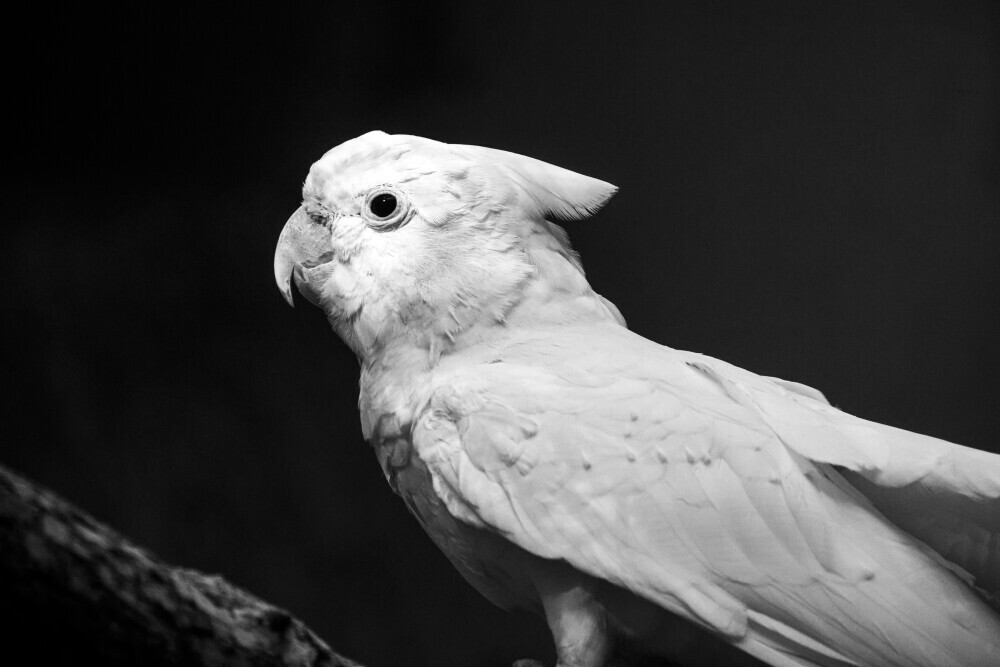
- High-key portraits of egrets, gulls, and other white birds on pale backgrounds for an almost dreamy effect.
- Low-key, dramatic shots with the bird emerging from deep shadow.
- Extreme closeups of feather patterns, wet beaks, or talons. Zoom in on what’s unique.
- Shooting in fog, mist, or rain for atmosphere and sometimes mystery. Try capturing reflections in puddles or water—it adds an extra dimension.
- Capturing birds bathing or preening, where droplets and movement add texture to the frame.
Pushing yourself to try different moods, angles, and subjects is part of the adventure.
Each attempt may help you track down a new favorite technique or an unexpected composition.
When Black and White Is not the Best Choice
- Birds with jaw-dropping colors (think kingfishers, hummingbirds, or parrots). You probably want to show off those shades.
- Scenes where the light is flat, and there is not enough difference between light and dark to make the subject stand out.
- Busy backgrounds with little tonal separation between the bird and its surroundings.
- When the story or message of the photo revolves around the color—sometimes color is part of the identity.
Occasionally, including subtle color, like a hint of a colored beak or leg, can enhance a shot more than going full monochrome.
Use your judgment while editing and experiment to see what helps your subject shine best.
Quick Checklist for Awesome Black and White Bird Photos
- Strong light direction
- Simple background
- Sharp focus on the eye
- Good contrast between bird and background
- Composition with purpose
- Always shoot in RAW
It also helps to double-check your final photo at different sizes.
Sometimes, details can look great up close but get lost in a smaller web version.
Keeping your editing process simple and focused makes postprocessing less daunting, letting your best shots stand out.
Frequently Asked Questions
What birds look best in black and white?
Birds with either pale or very dark feathers, strong light-dark patterns (like magpies, gulls, or herons), or birds that have really striking outlines work well in black and white.
Owls and raptors also make for striking subjects.
Should I shoot in black and white mode on my camera?
If your camera has a monochrome mode and you’re using live view, it’s pretty handy to preview.
But I always recommend shooting in RAW so you have all the editing options later. You can add the black and white look while processing and fine-tune every detail.
How do I increase contrast in black and white bird photos?
Use editing software like Lightroom or Photoshop and adjust the black and white mix sliders to make feather zones pop while preserving detail.
Dodge and burn tools help make key areas stand out without making the picture too harsh.
Is black and white bird photography easier than color?
It’s different, but not always easier.
You have to really look for lighting and shapes that work without color and avoid scenes where the subject and background blend together.
Practice helps; you start to spot good monochrome moments faster over time.
The Takeaway
Monochrome bird photos are all about light, shape, texture, and mood.
There’s a lot of freedom to experiment, and playing with lighting or bold compositions can make your images super memorable.
If you’re curious about more ideas, check out guides on feather detail photography or how to use depth of field to your advantage.
It all ties together when you’re working in black and white, and every experiment helps you grow your creative eye.
Wrapping up, don’t be afraid to try new things—sometimes your favorite images are the ones that break the rules just a little.